
Canada’s inflation rate slowed more than expected in February, with lower energy prices helping push the annual pace of consumer price growth below two per cent.
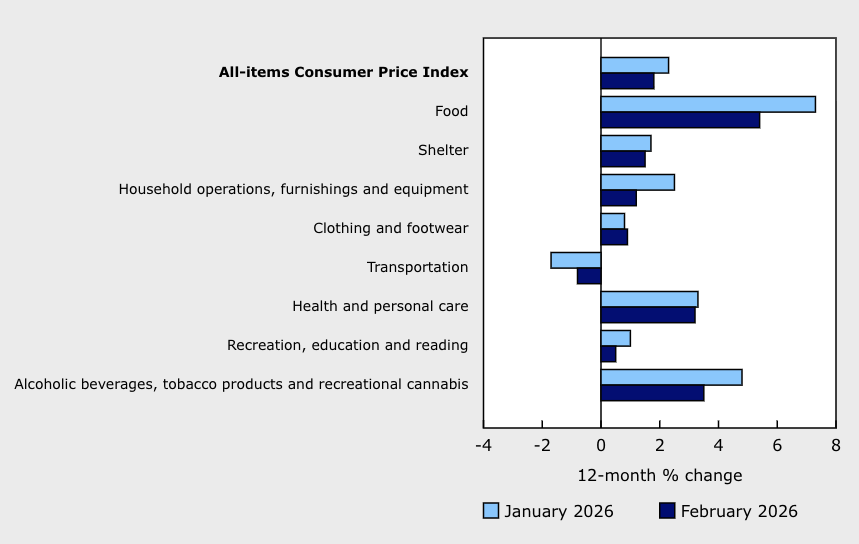
Statistics Canada said Tuesday that the Consumer Price Index rose 1.8 per cent year over year in February, down from a 2.3 per cent increase in January. On a monthly basis, prices rose 0.5 per cent.
The agency said the slowdown was largely the result of a base-year effect tied to the end of the federal GST/HST tax break in February 2025. Prices for several items — particularly restaurant meals — rose sharply at that time when the temporary tax relief expired, which now makes the annual comparison appear weaker.
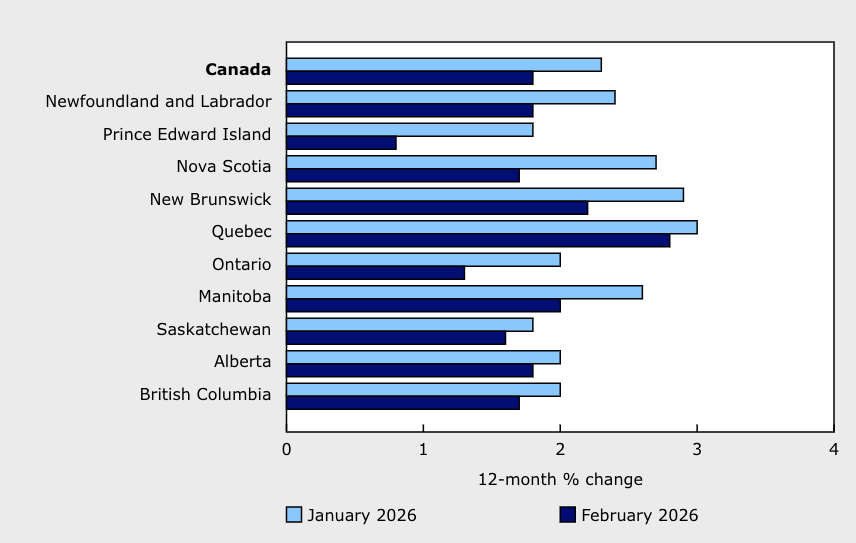
British Columbia saw a notable jump in gasoline prices during the month. StatCan said consumers in the province paid 9.6 per cent more for gasoline in February compared with January, the largest increase among the provinces, driven by lower supply linked to refinery maintenance and closures in the Pacific Northwest.
The province's overall rate of inflation in February was 1.7 per cent, down from two per cent in January.
Despite the slower headline inflation rate, food prices continued to rise at a brisk pace.
Prices for food purchased from stores increased 4.1 per cent year over year in February, down slightly from a 4.8 per cent increase in January. The moderation was broad-based but was led by beef prices, which still climbed 13.9 per cent compared with a year earlier.
Overall food inflation was 5.4 per cent in February, down from 7.3 per cent in the previous month.
Food inflation remains a major pressure point for households. Statistics Canada noted grocery prices have risen 30.1 per cent since February 2021.
Restaurant prices also continued to increase sharply. Food purchased from restaurants was up 7.8 per cent year over year, though the pace slowed because of the base-year effect related to the end of the tax break in early 2025.
Energy prices helped keep overall inflation in check.
Gasoline prices were down 14.2 per cent compared with February 2025, while natural gas prices fell 17.1 per cent. Lower costs for travel tours, homeowners’ replacement costs and other housing-related expenses also contributed to easing price pressures.
Some services inflation also cooled. Cellular service prices rose just 1.5 per cent compared with a year earlier, slowing from a 4.9 per cent increase in January as wireless providers introduced lower-priced plans.
.jpg)
Excluding the impact of indirect taxes, the CPI rose 1.9 per cent year over year in February, continuing a gradual deceleration since late 2025.
Economists are closely watching inflation data as the Bank of Canada weighs its next policy move.
The central bank’s key policy interest rate currently stands at 2.25 per cent, and its next rate decision is scheduled for March 18.